Your business card is often the first physical thing a customer holds from your brand. The finish, meaning how the card feels and catches the light, does as much work as the design. Here’s a straight guide to the options we print at Madina, and when each one makes sense.
Matte vs gloss: the basics
Gloss is shiny, makes colours pop, and resists scuffs, great for photography-heavy or bold, colourful cards. The trade-off: you can’t easily write on it, and fingerprints show.
Matte is smooth and non-reflective, reads as understated and modern, and takes pen well. It’s the safe, professional default for most Edmonton businesses.
Soft-touch (suede) laminate
Soft-touch is our most-requested premium finish. A velvety coating gives the card real weight and a suede-like feel that makes people pause when they take it. It resists fingerprints and pairs beautifully with a spot-UV or foil accent.
Spot-UV: shine exactly where you want it
Spot-UV lays a glossy, slightly raised coating over specific elements, usually a logo, on an otherwise matte card. The contrast between matte and gloss is subtle in a photo but unmistakable in the hand.
Foil stamping
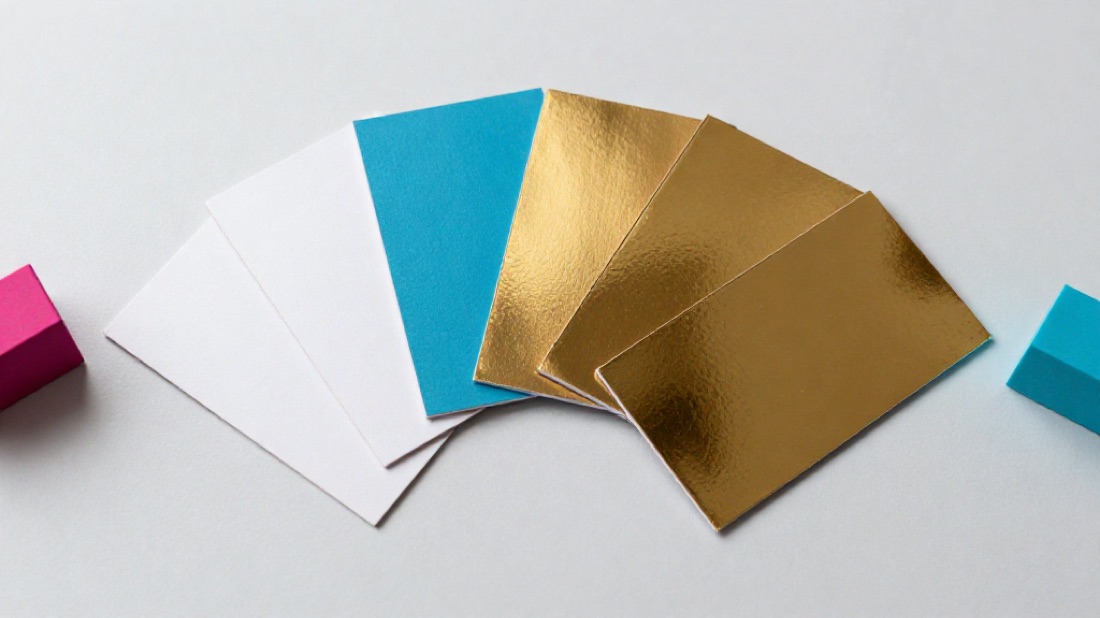
Metallic foil (gold, silver, rose-gold or copper) is pressed into the card for a genuine shine that ink can’t replicate. It signals premium instantly, which is why beauty, real estate and wedding brands love it.
Painted edges & thick stocks
Want maximum impact? A 32pt triple-layer stock with a painted colour edge frames every card in your brand colour. It’s the closest print gets to a business-card flex.
Which should you choose?
- Trades & everyday networking: 16pt matte or gloss: durable and affordable.
- Professional services (law, finance, consulting): soft-touch or linen texture.
- Beauty, real estate, weddings: foil or spot-UV on soft-touch.
- Design-forward brands: painted edge or square format.
Not sure? Add a couple of options to a quote request and we’ll talk you through the trade-offs, and print exactly what fits your brand and budget.